PUBLICATIONS
Here is a listing of my officially published main/co-authoring works. There are still a lot of unofficial pending ones that will be added as time progresses.
2015
Malay Named Entity Recognition: A Review
Farid Morsidi, Sulaiman Sarkawi, Suliana Sulaiman, Siti Asma Mohammad, Rohaizah Abdul Wahid.
Journal of ICT in Education (Volume 2)
http://ejournal.upsi.edu.my/index.php/JICTIE/article/view/2596
Proposes approaches that have been applied in the fields of NER that is in malay, or partially related to it, in order to detect proper nouns within Malay documents. This paper also discusses the various researches done in an effort to produce high-quality training data for Malay corpus via appropriate NER algorithms and methods aside from highlighting the key points needed in improving the current NER studies.

2017
Feature Extraction using Regular Expression in Detecting Proper Noun for Malay News Articles based on KNN Algorithm
Farid Morsidi, Suliana Sulaiman, Rohaizah Abdul Wahid.

Examining the impact of regex on text pattern identification sequence that queried and acquired proper nouns from a collection of unannotated Malay language news articles that envisions several techniques to improve text entities precision and accuracy such as pre-processing and data clustering.
2018
Self-Adaptive Ensemble based Differential Evolution
Wang Shir Li, Farid Morsidi, Ng Theam Foo.
International Journal of Machine Learning and Computing, 8 (3), 286-293
Develop a Differential Evolution optimization method which can adaptively determine the appropriate parameters to solve different optimization problems with minimum guidance from users, apart from combining self-adaptive and ensemble mechanisms to dynamically change the control parameters as well as mutation strategy during evolution with minimum intervention from users.

2019
Insights into the Effects of Control Parameters and Mutation Strategy on Self-Adaptive Ensemble-based Differential Evolution
Wang Shir Li, Farid Morsidi, Ng Theam Foo, Haldi Budiman, Neoh Siew Chin.

Explores the challenges in identifying appropriate and significant parameter configurations in differential evolution (DE) under the influence of population diversity and dimension size, aside from investigating the implementation of various adaptive parameter setting configurations on benchmark functions via the proposal of an algorithmic scheme called self-adaptive ensemble-based DE (SAEDE).
2021
Self-Adaptive Ensemble-based Differential Evolution with Enhanced Population Sizing
Haldi Budiman, Wang Shir Li, Farid Morsidi, Ng Theam Foo, Neoh Siew Chin.
2nd International Conference on Cybernetics and Intelligent System (ICORIS)
Sheds light on the impact of DE towards population diversity and dimension size. The algorithm variant scheme proposed, known as self-adaptive ensemble-based differential evolution with enhanced population sizing (SAEDE-EP), is compared to self-adaptive ensemble-based DE (SAEDE) to minimize user setting and exhausting trial-and-error procedure for appropriately configuring scale factor, crossover rate, mutation strategy, and population size. The performance is appraised based on 26 benchmark functions comprising on 8 low dimensions and 18 high dimensions.
2022
Multi-Depot Dispatch Deployment Analysis on Classifying Preparedness Phase for Flood-Prone Coastal Demography in Sarawak
Farid Morsidi
Journal of ICT in Education (Volume 9, No. 2)
https://ejournal.upsi.edu.my/index.php/JICTIE/article/view/7325

Demonstrate the benefits of multi-path route selection in task distribution to cater to simultaneous demands for adhering to strict constraint settings, including load dispatch dynamism and deployed vehicle quantities. Shortest path algorithms are improvised as an alternative to select the most optimum traveled routes during relief commodity distribution.
2023
Distribution Path Segmentation using Route Relocation and Savings Heuristics for Multi-Depot Vehicle Routing
Farid Morsidi

Incorporates routing segmentation optimization for multi-depot vehicle routing problems to plan optimal distribution networks between urban depots and their customers. Three steps are proposed: search for the initial solution, improve the solution with route relocation and savings heuristic, and perturb the solution with tabu search. Test results show that the proposed strategy is more successful in optimizing route segregation than the original genetic algorithm solution, demonstrating a significant improvement in route optimization.
2023
Overview Discourse on Inherent Distinction of Multiobjective Optimization in Routing Heuristics for Multi-Depot Vehicle Instances
Farid Morsidi, Wang Shir Li, Haldi Budiman, Ng Theam Foo

This paper examines the benefits and traits of multi-depot vehicle routing problem (MDVRP) instances and evaluates the effectiveness of various techniques to improve routing procedures. It highlights the importance of improving logistics management by serving more customers in shorter time and increasing customer satisfaction. The paper analyzes selected approaches involving multi-depot task distribution under MDVRP incorporations, addressing common routing issues like cost optimality, time window impositions, and load capacity flexibility. Recent research focuses on the advantages, proficiency, problem magnitude, and adaptability of MDVRP. The paper suggests that reducing routing costs with efficient heuristics can significantly improve the MDVRP framework.
2023
Overview of the Integral Impact of MDVRP Routing Variables on Routing Heuristics
Farid Morsidi, Ismail Yusuf Panessai

This paper reviews research methodologies used to examine the benefits and characteristics of MDVRP in resolving real-world issues, discussing various algorithms and optimization methods used to save time and money while maintaining high service levels. MDVRP has potential applications in logistics and transportation, including resource allocation, scheduling, and route planning.
2023
Using Routing Heuristics to Improve Cost Interoperability: Strategy, Modelling Annotations, and Dynamism
Farid Morsidi
International Journal of Global Optimization and its Application

This literature review analyzes cost optimization features integrated with relative scheduling systems, promoting heterogeneous subjugation towards cost interoperability based on diverse goals. 250 papers were analyzed from prominent scientific journal databases to examine relative cost interoperability measures in routing strategies. The study identified several dominant trends that could serve as guiding principles for further solution strategies. The review provides a comprehensive analysis of existing problem-solving strategies and offers opportunities for further research.
2023
Influence of Shortest Route Approximation on Relegating Urban Area’s Transportation Network Priorities
Farid Morsidi, Haldi Budiman
Asia Pacific Journal of Information Technology and Multimedia, Vol. 12, No. 2 (December 2023)
dx.doi.org/10.17576/apjitm-2023-1202-05

This research focuses on optimizing vehicle routing for efficient distribution networks by maximizing traversal coverage. It aims to incorporate shortest path routing heuristics to maximize traversable nodes in a round trip distribution cycle. The study extends sentient pathfinding capabilities from intelligent graph traversal algorithms to address cost optimality constraints. The algorithm is proactive and suitable for various routing characteristics, including customer clustering in vehicle routing and location-allocation instances for optimal resource allocation.
2025
Meta-Analysis on Substantive Mechanics for Maximizing Productivity and Cost Reciprocity in Routing Optimization
Farid Morsidi, Wang Shir Li
Applied Mathematics and Computational Intelligence (AMCI), Vol. 14, No. 2 (June 2025)
10.58915/amci.v14i2.918
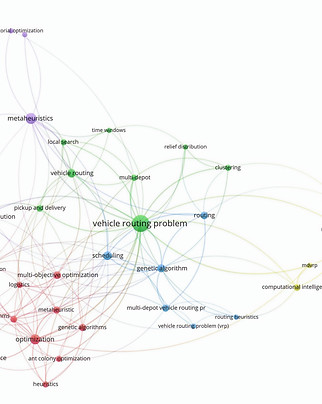
This meta-analysis reviews 80 papers through a standard population of 1000 papers on tradeoffs of routing results and cost-aware scheduling models. The approach utilized cost-approximating metrics. The meta-analysis show a scope of routing optimization topics with the use of intelligent algorithms for increased efficient programming. The scientific resources examined including ACM and Scopus established the importance of modifying cost-effective approaches and highlighted the relative prominence of aspiration criteria that have emerged in routing strategies. The study concludes by discussing potential future integration opportunities for distribution scheduling.
2025
Hybrid Learning for Bottlenose Dolphin Motion Approximation Using Weighted Polling KNN and Bayes Mechanism
Farid Morsidi
International Journal of Software Engineering and Computer Systems (IJSECS), Vol. 10, No. 2 (December 2024)

This research studied the advantages of combining supervised clustering with probabilistic classifiers, K-Nearest Neighbors (KNN), and Bayes classifiers, when designating distinctive dolphin classes. The analysis showed weighted KNN provided an overall accuracy of 97%, while Bayes provided an overall accuracy of 91%, which is believed to be significant in the context of marine conservation as identification of ecological habitats.
2024
Review of Original Differential Evolution Algorithm: Research Trends, Original Setting Parameters
Haldi Budiman , Shir Li Wang , Siti Ramadhani , Farid Morsidi, Theam Foo Ng, Usman Syapotro
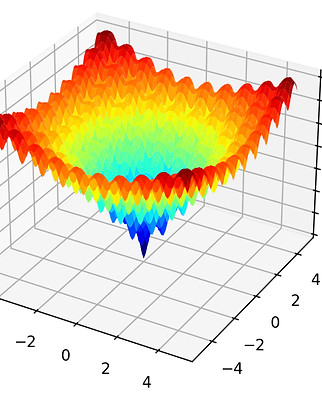
The optimization algorithm Differential Evolution (DE) has gained popularity for its strong performance in IEEE Congress on Evolutionary Computation (CEC) competitions. This study seeks to identify key regulatory parameters and manage DE parameter evolution through a literature review from 2010 to 2021, analyzing trends and parameter settings. The analysis included 1,210 publications, with 358 articles selected after screening. The final collection highlights the consistent use of tuning parameters, self-adaptive mechanisms, and ensemble methods, enhancing our understanding of DE’s effectiveness in CEC competitions.
2025
A Modular Java-Based Framework for Deploying ONNX Time-Series
Forecasting Models: A Rainfall Prediction Case Study
Farid Morsidi
Journal of Applied Engineering Design & Simulation (JAEDS), Vol. 5, No. 2 (September 2025)
10.24191/jaeds.v5i2.144
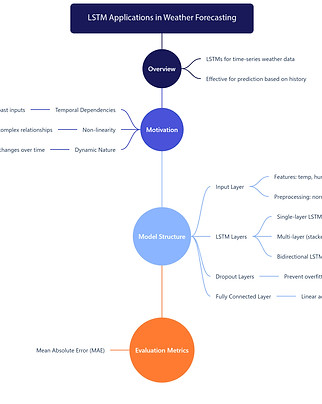
This paper proposes a modular, extensible Java web-based framework for deploying DL models on time-series forecasting problems, and specifically rainfall prediction. It enables the easy integration of LSTM-based DL models trained using PyTorch and exported in ONNX format and leverages Deep Java Library to perform inference. The framework also employs a JavaFX GUI to allow users to import and view CSV datasets and results in a user-friendly, programming knowledge required way. While the rainfall case study accuracy was limited, this framework has the potential to enable a range of machine learning applications in various domains as it affords a bridge between deep DL model development and real-world deployment.
2026
An Intensification-Enhanced Adaptive Hybrid Memetic Algorithm for the Multi-Depot Vehicle Routing Problem with Time Windows
Farid Morsidi
Applications of Modelling and Simulation (AMS), Vol. 10 ( January 2026)
https://arqiipubl.com/ojs/index.php/AMS_Journal/article/view/1127
.png)
This paper introduces the Intensification-Enhanced Adaptive Hybrid Memetic Algorithm (IA-AHMA) to address Multi-Depot Vehicle Routing Problem with Time Windows (MDVRPTW). IA-AHMA utilizes adaptive penalty approaches, permutation-based crossover (PMX) operators, a hybrid 2-opt/relocate local search, and online parameter tuning. Experimentation with standard benchmarks demonstrates that IA-AHMA outperforms Differential Evolution and traditional Genetic Algorithms, achieving a 7.8% improvement over GA and 12.3% over DE, while reducing variance by 31.6% and 24.1%, respectively. The results confirm the efficacy of adaptive intensification in optimizing challenging multi-depot routing issues.
2026
MLP Sliding-Window Forecasting for Electricity Load Prediction: A Multi-Scale
Evaluation using an ONNX-based Java Framework
Farid Morsidi, Asma Hanee Ariffin, Rohaizah Abdul Wahid
Journal of Applied Engineering Design & Simulation (JAEDS), Vol. 6, No. 1 (March 2026)
10.24191/jaeds.v6i1.164
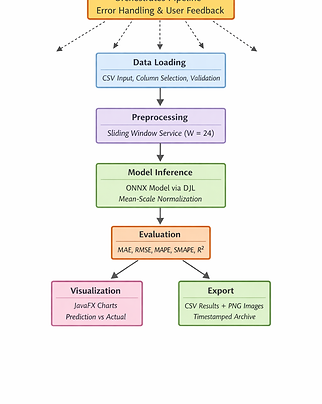
This paper introduces a modular framework for deploying ONNX models in Java, evaluating an MLP sliding-window architecture against LSTM. It establishes performance benchmarks using five evaluation metrics (MAE, RMSE, MAPE, SMAPE, R2). Evaluations with electricity consumption data indicate the MLP model outperforms LSTM, achieving R2 of 0.9895, MAE of 0.5907, and MAPE of 7.19%. The framework ensures reproducibility with a custom threshold for MAPE, suggesting simpler MLP designs can excel in speed and implementation.
2026
Scalable Metaheuristic Optimization of Asymmetric and Clustered TSP Variants using Iterated Local Search
Farid Morsidi
Journal of Telecommunication, Electronic and Computer Engineering, Vol. 18, No. 1 (2026)
https://doi.org/10.54554/jtec.2026.18.01.005

Iterated Local Search (ILS) is a metaheuristic effective in combinatorial optimization, particularly for the Asymmetrical Traveling Salesman Problem (ATSP) and Asymmetrical Generalized Traveling Salesman Problem (AGTSP), considering directionally dependent route costs and node clusters. This study evaluates ILS's ability to navigate challenging search spaces while maintaining solution quality and avoiding fast convergence. It tests benchmark instances from TSPLIB with constraints like directed costs, time windows, and load capacities. Results show ILS achieves high-quality solutions even in complex routing scenarios. Future research aims to enhance ILS through a hybrid metaheuristic framework for large-scale logistics.